

Star spotter
-
- from Shaastra :: vol 05 issue 04 :: Apr 2026
A Scottish immigrant, once a housekeeper, found hundreds of celestial objects.
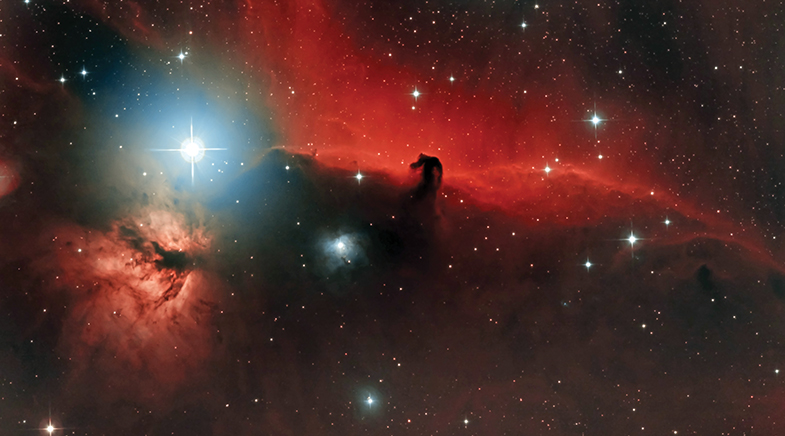
If you point a telescope towards the southeast sky on a bright, clear night, you might see the three stars that make up the famous Orion's Belt. Zoom in on the easternmost star (called the Alnitak or Zeta Orionis) and move your telescope about half a degree south. A bright, diffused cloud belonging to a nebula called IC 434 might appear. Silhouetted against this brightness is a dark, seahorse-shaped patch of gas and dust that makes up another, more famous nebula called the Horsehead Nebula.
Little things
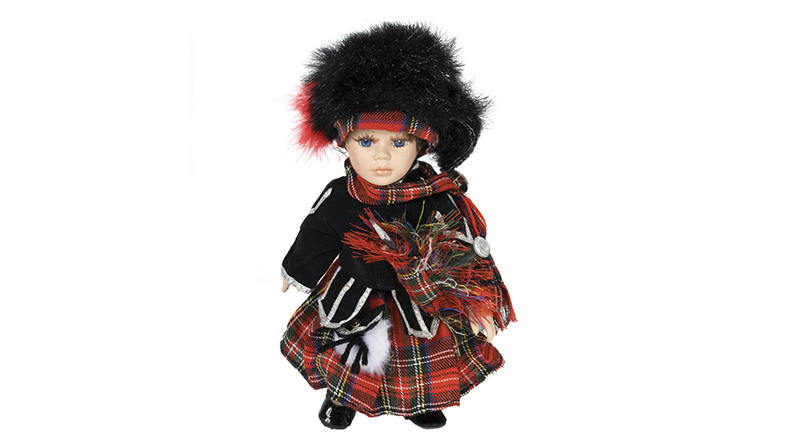
Fleming enjoyed small pleasures – from cheering at college football matches to dressing up dolls in traditional Scottish costumes (bit.ly/Dressing-Dolls). Known for her strong work ethic and lively mind, she had a cheerful Scottish demeanour that made her a warm and generous host. She was also protective of the women who worked under her supervision and encouraged them to make their own discoveries.
To Williamina Fleming, who first spotted the nebula on a photographic plate in 1888, this now iconic shape appeared like a tiny smear — "a semicircular indentation 5 minutes in diameter, 30 minutes south of Zeta Orionis", she wrote — the minute here referring to 1 arcminute or 1⁄60th of a degree (bit.ly/Horsehead-Fleming). Fleming was not originally trained as an astronomer; she was one of the 'Harvard Computers', a group of women hired to do the grunt work of cataloguing stellar spectra captured on photographic plates by the observatory's telescopes.
Pay parity
Fleming was no stranger to sexism. The first edition of the Draper star catalogue was published with credit given solely to observatory director Pickering. She and the other 'women computers' were paid only about half as much as their male counterparts (bit.ly/Pay-Disparity). At the 1893 Chicago World's Fair, she strongly urged that more women be hired in astronomy.
Born in 1857 in Dundee, Scotland, Fleming left school at 14 to become a teacher. At 21, she immigrated to Boston, U.S., with her much older husband, who soon abandoned her in the new country while she was pregnant. Desperate to make ends meet, she secured a job as a housekeeper for Edward Pickering, an astronomer at the Harvard College Observatory. Pickering later hired Fleming to do administrative work at the observatory.
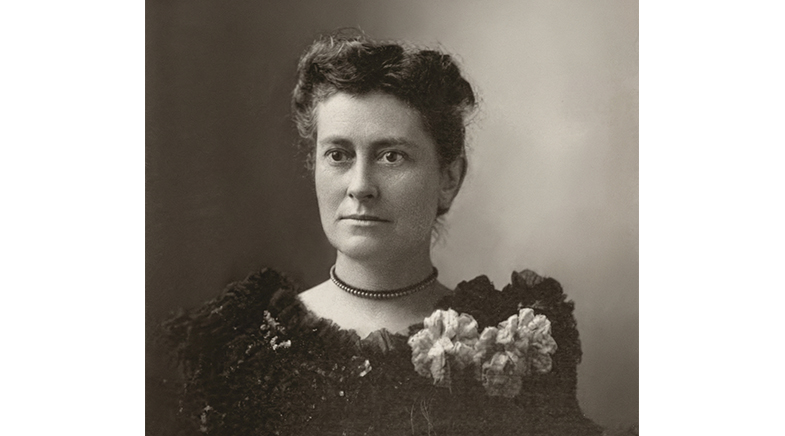
In 1886, Mary Draper, a wealthy widow, donated funds to the observatory in her late husband's name to create an extensive spectroscopic catalogue of stars. Fleming supervised and worked closely with dozens of women hired for the project. Using a magnifying glass, they peered over thousands of specks of light captured by the observatory's telescopes on the plates, and painstakingly catalogued each star based on its spectrum.
The first person to spot the Horsehead Nebula among the objects on the plate, Fleming also developed a simple system that grouped stars into 17 classes based on the strength of their hydrogen spectral lines, which came to be known as the Pickering-Fleming system. Using the spectral lines, she was able to pinpoint more than 220 variable stars — stars whose brightness appears to fluctuate with time. By 1890, some 10,000 stars had been classified, many of them by Fleming. One of the stars that she classified — Sirius B — was later recognised as the first white dwarf discovered.
For her contributions, Fleming was appointed the first woman Curator of Astronomical Photographs at the Harvard College Observatory, and became one of the first women to receive an honorary membership of Britain's Royal Astronomical Society. Fleming died in May 1911 at the age of 54, after a brief illness. Several of the women that she mentored at Harvard also went on to make groundbreaking astronomical observations of their own, laying the foundations for generations of stargazers.








Blood, sweat and cures
A recent gene therapy treatment, based on decades of research, shows promise against thalassemia and sickle cell disease.


The power of the quantum sensors
A few European start-ups and research projects provide a glimpse of the power of quantum sensors.
Have a
story idea?
Tell us.
Do you have a recent research paper or an idea for a science/technology-themed article that you'd like to tell us about?
GET IN TOUCH