

Reaching out…
-
- from Shaastra :: vol 05 issue 05 :: May 2026
… to people with sight- and mobility-related problems.
H Vision India
Founders: Hasin Vaidya and Kashish Vaidya
Year: 2024
Big idea: A smart wallet to help people identify banknotes
In his Bachelor of Product Designing programme at Karnavati University, Gujarat, Hasin Vaidya had to design a project for people with special needs, for which he visited several non-governmental organisations (NGOs) in and around Ahmedabad. On one such visit, he saw a visually impaired person checking the size of each note in his possession before paying for a cup of tea, then giving the smallest one to the tea-seller and asking if he had given him the right amount.
This was an eye-opener for him, says Hasin. He went on to work on a project to help the visually impaired recognise currency notes by touch. Convinced that the project had commercial potential, he formed a company — called H Vision India — along with his brother, Kashish, who had studied architecture.
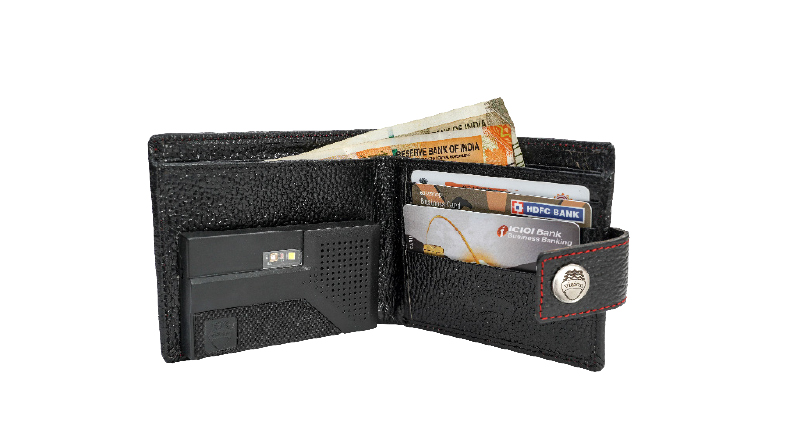
Hasin participated in HaRBInger 2024, a global hackathon organised by the Reserve Bank of India, and was one of the winners for developing a product that helps people identify banknotes. He continued researching the subject and discussed the issue with visually impaired people. And he came up with the idea of a smart wallet. The wallet has a small device with a voice output that helps a person identify the denomination of a note.
Banknotes come embedded with security features. Each currency note has a distinct colour temperature; each also has UV fluorescence and a magnetic strip. The device that H Vision India built can detect all these unique characteristics in a note. At times, he says, counterfeit notes can bypass the UV features, but the magnetic strip is difficult to bypass. The company built the software and assembled the device with bought components, including printed circuit boards. The device — about the size of a business card — is fixed to the wallet, and all that a person has to do is place a currency note from the wallet on the device, and it will give a voice output in Hindi and English on its denomination. The device will detect the denomination even if the note is soiled, he says.
At present, the voice output is available in only two languages, but the company is working to add more languages, as there has been demand from States for the inclusion of more regional languages. The start-up is marketing the wallet with the device mainly through NGOs, banks and companies as part of their corporate social responsibility programmes.
ForHealth
Founder: Harshesh Gokani
Year: 2021
Big idea: A robot to help patients and physiotherapists
Even as a student, Harshesh Gokani was passionate about automation and robotics. After studying mechanical engineering at the National Institute of Technology Karnataka, he joined Daimler India Commercial Vehicles in Chennai, where he worked on low-cost automation to improve productivity and efficiency.
Running was another of his interests. Once, after a 10-km run, he had a hamstring injury for which he had to undergo physiotherapy. At the physiotherapist's clinic, he noticed patients with serious health issues. He also observed that the physiotherapists spent a large part of their time doing routine tasks with their patients. This got him thinking: why not build something that automates routine work, allowing physiotherapists to spend more time on patients who need more attention?
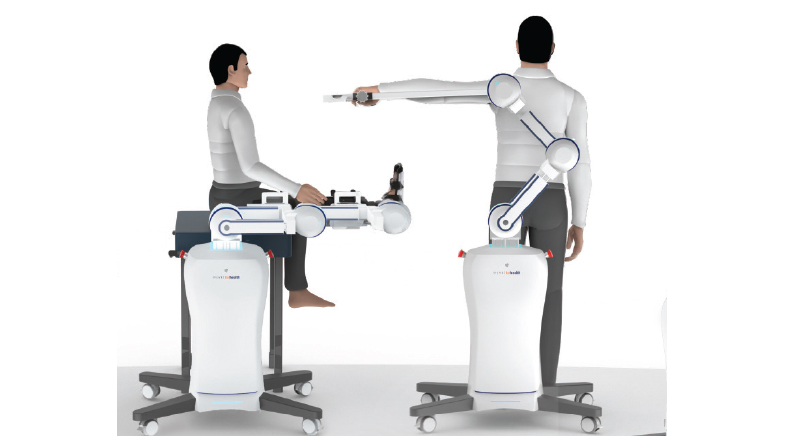
He continued with his job but, on weekends, worked on a prototype, which he showed to the sports medicine doctor he was consulting. The doctor told him it would help people who needed intense physiotherapy. Convinced that there was a market for his product, Gokani quit his job and started ForHealth. The company has built a robot that automates most of a physiotherapist's work and is ideal for both upper-limb and lower-body rehabilitation. It took the company nearly four years to develop the device that could be wheeled into inpatient wards.
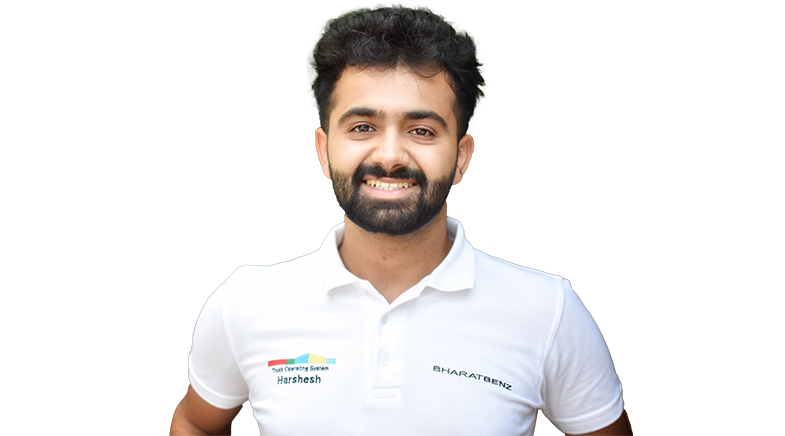
"Our device works across mobility, flexibility and assisted strengthening. It has close to 250 upper and lower limb exercises, and can be used when the patient is lying down, sitting or standing," says Gokani. In the early stages of rehabilitation, the robot will assist the patient and, as the patient progressively improves, it will increase resistance. The patient will have to put in more effort, which will lead to better recovery. "Since it is monotonous, we have added games to increase adherence. A lot of real-time data can be generated from the device for the physiotherapist," says Gokani.
He says the software developed by his company is available on a tablet, and the entire physiotherapy regimen can be programmed into it. The patient's efforts will be displayed in real time on the tablet. The company has started doing trials in hospitals in Mumbai and Pune. The robot consists of nearly 950 parts. Some 15 parts are sourced from China, Sweden and Denmark; the rest are designed and manufactured in India, he says. The company's customers are typically hospitals with attached physiotherapy departments.
Translead Medtech
Founders: Sanchit Jhunjhunwala and Manoj Kumar R.
Year: 2019
Big idea: A chair that helps older people and those with disabilities sit and stand
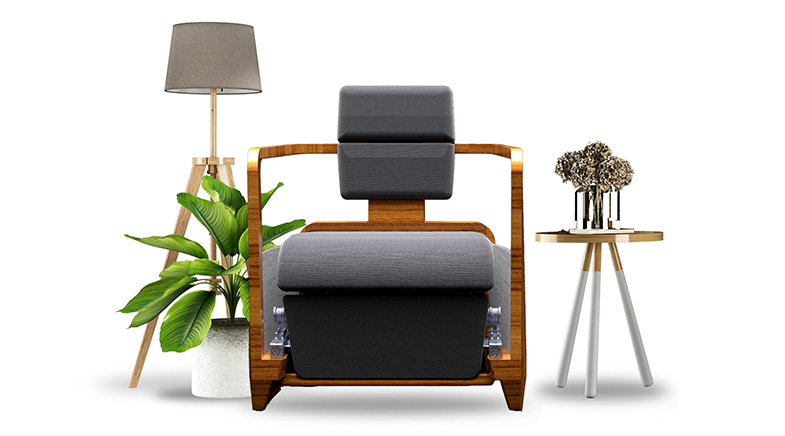
Stand AtEaze is no ordinary chair: older people or those with mobility problems can sit on it and get up with relative ease. "The mechanical, independent chair offers dynamic balancing and serves as an assistive and rehabilitative device offering reliable support at home and in hospital settings," says Sanchit Jhunjhunwala, one of the founders of Translead Medtech, which has developed the chair. The venture is a spin-off from the M2D2 (Multidisciplinary and Multiscale Design and Device) Laboratory at the Indian Institute of Science (IISc), Bengaluru.
The mechanical engineering graduate from the Indian Institute of Technology Guwahati was always interested in building products. So, Jhunjhunwala, who had previously worked for a public-sector oil company, reached out to G.K. Ananthasuresh, Professor of Mechanical Engineering at IISc, for an internship. The Professor put him in touch with Manoj Kumar R., who had completed his mechanical engineering from the Malnad College of Engineering, Hassan, and was a junior research fellow at IISc. The two went on to set up Translead Medtech, and the chair is its first product.
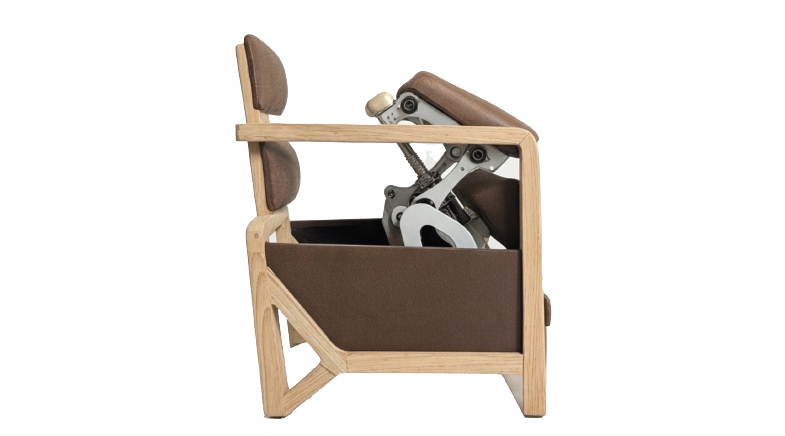
The chair, which addresses the issue of the thigh muscle getting activated whenever a person tries to sit or stand, was the result of a research project being done at the M2D2 lab that involved geriatricians, and orthopaedic and community health experts who were looking at problems faced by an ageing population and trying to address the infrastructural issues around activities of daily living, says Jhunjhunwala. Sitting down in a chair and getting up from it are common activities, but high thigh muscle activation can be a problem, especially in older people.
PHOTO: BY SPECIAL ARRANGEMENT
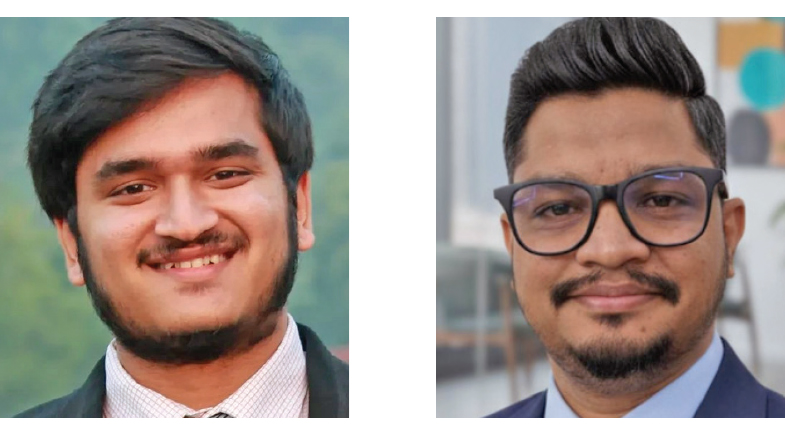
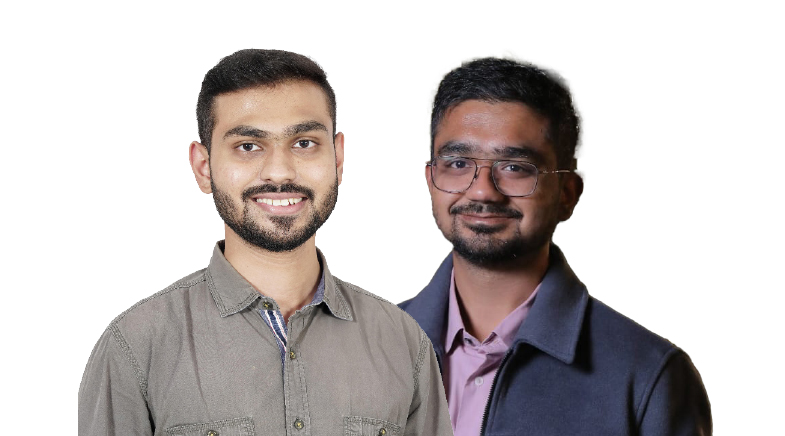
Sanchit Jhunjhunwala (left) and Manoj Kumar R. of Translead Medtech; a chair (below) that addresses thigh muscle activation.
Designed with inputs from geriatricians and users, the chair features a patented compliant hinge mechanism. As a user starts to sit, the chair provides a sharp rise, offering crucial support; the chair's rise gradually slows as the person sits down. This ensures that the person does not have to exert unnecessary tension or pressure on the knees. When the person starts to get up, the seat pushes the user, offloading its arms and minimising muscle use. Additionally, the mechanism provides resistance against sudden drops, protecting the hips and reducing pressure on the thigh muscles.
According to Jhunjhunwala, the mechanism is a tuneable torque spring that allows post-manufacture specification of torque characteristics. Typically, a spring's force/torque versus displacement characteristics are set in place during the manufacturing process and are permanent. "However, our compliant hinge, developed at the M2D2 Lab, enables specification of a desired torque-displacement curve by precisely coupling torsion and bending with the help of a cam component. Further, the CH-ARM (Compliant Hinge-Aided Responsive Mechanism) platform allows the specification of an envelope, rather than a curve, to program the system's responsiveness without needing any active components," he says. This hinge can be fitted onto an existing chair.
After conducting pilots in Bengaluru, Translead Medtech, which designs and makes these chairs, has been rolling them out in a limited way, to begin with. The chairs are sold to hospitals and through direct marketing.








In aid of teeth, words and drugs
With nanorobots and data banks, ventures are resolving a spectrum of problems — from dental to oral.

Microbes vs methane
Researchers are employing methane-eating bacteria to deal with the menace of the potent greenhouse gas.
Pore-forming to the fore
Nanopore technology comes to the aid of biomedical applications.
Have a
story idea?
Tell us.
Do you have a recent research paper or an idea for a science/technology-themed article that you'd like to tell us about?
GET IN TOUCH