

Making a mental note
-
- from Shaastra :: vol 05 issue 04 :: Apr 2026
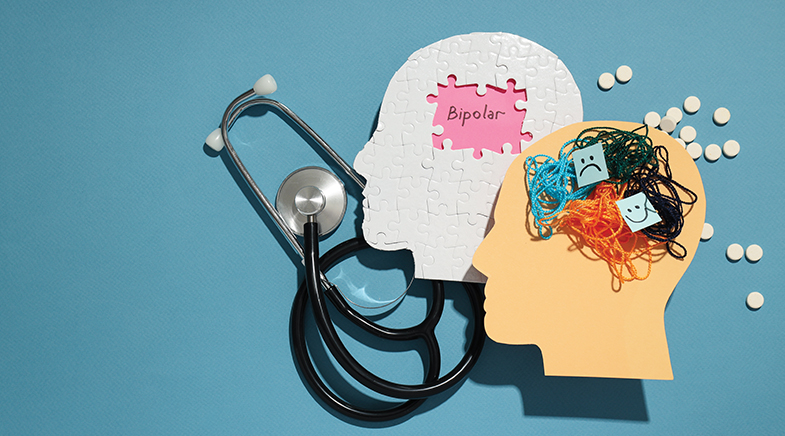
India gets its first open-access database on mental health.
Adigital database that integrates clinical, neuroimaging, behavioural, and genetic data across major psychiatric conditions promises to throw light on signals that underlie disease. Called CALM-Brain, the database was released in March 2026 by the Rohini Nilekani Centre for Brain and Mind (CBM), a partnership between the National Institute of Mental Health and Neuro Sciences (NIMHANS) and the National Centre for Biological Sciences (NCBS) – Tata Institute of Fundamental Research.
The repository includes information from nearly 2,000 individuals affected by conditions such as schizophrenia, bipolar disorder, obsessive-compulsive disorder, Alzheimer's disease, and dementia, as well as family members and healthy control participants with no history of mental illness.
The study, which started in 2016, will continue adding people to the dataset while following up with those already in it. Participants in the study undergo extensive clinical assessments that can last several hours, ensuring detailed characterisation of their mental health status. In addition to clinical data, researchers collect a wide range of biological samples, including blood, DNA, serum, and plasma.
The long-term approach allows researchers to observe how mental illnesses develop over time, including cases where currently unaffected individuals may later develop symptoms.
A key strength of this project is its family-based cohort design, which differs from larger, international, population biobanks, such as the U.K. Biobank. By studying multiple members within the same families, researchers can more effectively identify genetic patterns, shared environmental influences and other biological signals that trigger disorders.
This is particularly relevant in India, where marriages between close communities and sometimes even within families are not uncommon. Family-based cohorts become particularly relevant in such populations: they allow researchers to assess the heritability of traits. "Family-based samples facilitate research that clarifies causal relationships between putative risk factors and outcomes, particularly in estimates of genetic effects, because they enable analyses that reduce or eliminate confounding due to familial and demographic factors," says a 2024 article in Nature (bit.ly/Family-Importance).
Another important feature of the database is its aim to follow up with participants for at least 20 years. This long-term approach allows researchers to observe how mental illnesses develop over time, including cases where currently unaffected individuals may later develop symptoms. Such data would be crucial for identifying early warning signs and potential predictors of disease onset.
The database is open to the public. Anyone hoping to use the data can submit a scientific proposal. If the proposal is found to be sound, access to the data would be provided, says Biju Viswanath, Professor of Psychiatry at NIMHANS. "We want more people to put their brain into trying to understand what is happening, which is why we want to open the data to the world," he adds.









Spate of affairs
Studies calling for a relook at flood management practices hold water.


Break the mould
Mycologist Keith Seifert offers readers a personalised account of his exploratory journey through the labyrinths of the fungal kingdom.
Have a
story idea?
Tell us.
Do you have a recent research paper or an idea for a science/technology-themed article that you'd like to tell us about?
GET IN TOUCH